
Manual release
The parking brake can be released manually in the event of a power failure or electrical fault.
 Before releasing, secure the vehicle
against rolling
Before releasing, secure the vehicle
against rolling
Before releasing the parking brake manually, and whenever you park the vehicle with the parking brake released, ensure that position P of the automatic transmission is engaged.
Secure the vehicle in a manner appropriate to the inclination of the road, e.g., with a wheel chock; otherwise, there is the danger of the vehicle rolling.
Unlocking
1. Remove the release tool from the tool kit.
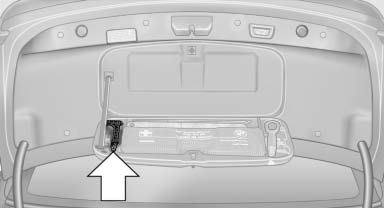
2. Raise the floor panel in the cargo area.
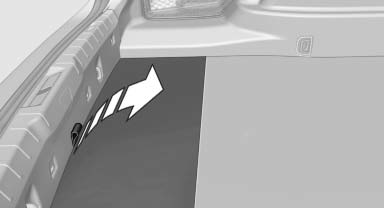
3. Take out the floor trim in the cargo area, removing the screws with the release tool, arrows.
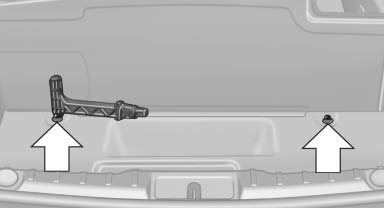
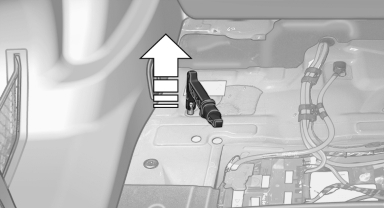
4. Place the release tool on the release point, arrow.
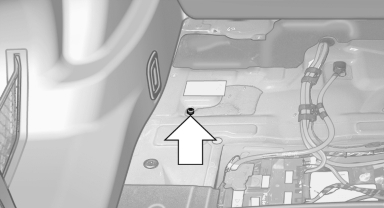
5. Forcefully pull the release tool up against the resistance until you notice a marked increase in the resistance and the parking brake releases audibly.
Have the malfunction corrected
If the parking brake has been released manually in response to a malfunction, only technicians can return it to operation.
Have the malfunction corrected by your service center.
See also:
Displaying contacts
General information
1. "Office"
2. "Contacts"
All contacts are listed in alphabetical order. Depending
on the number of contacts, an A-Z
search is offered.
A symbol indic ...
Updating the navigation data
General information
Navigation data are stored in the vehicle and can
be updated.
Navigation data and authorization codes are
available from your service center.
▷ Depending on the data v ...
At a glance
This overview of buttons, switches and displays is intended to familiarize you
with your vehicle's operating environment. The section will also assist you in becoming
acquainted with the contr ...