
Starting the engine
 Do not run the engine in enclosed areas; otherwise,
the inhalation of toxic exhaust gases can cause loss of consciousness and death.
The exhaust gases contain carbon monoxide, an odorless and colorless, but highly
toxic gas. Never leave an unattended vehicle with the engine running; otherwise,
such a vehicle represents a potential safety hazard.
Do not run the engine in enclosed areas; otherwise,
the inhalation of toxic exhaust gases can cause loss of consciousness and death.
The exhaust gases contain carbon monoxide, an odorless and colorless, but highly
toxic gas. Never leave an unattended vehicle with the engine running; otherwise,
such a vehicle represents a potential safety hazard.
Before leaving the car with the engine running, place the transmission in neutral or move the selector lever to position P and forcefully apply the parking brake to prevent the car from moving.
Do not wait for the engine to warm up while the vehicle remains stationary. Start driving right away, but at moderate engine speeds.
Avoid frequent starting in quick succession
or repeated start attempts in which the engine does not start. Otherwise, the fuel
is not burned or incompletely burned and there is a danger of overheating and damaging
the catalytic converter.
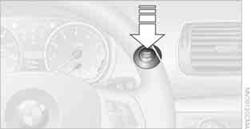
Remote control in the ignition lock or, with Comfort Access, inside the vehicle.
1. Depress the brake.
2. Depress the clutch and shift into neutral.
3. Press the Start/Stop button.
The starter operates automatically for a certain time, and stops automatically as soon as the engine has started.
Automatic transmissionRemote control in the ignition lock or, with Comfort Access, inside the vehicle.
1. Depress the brake.
2. Move the selector lever to position P.
3. Press the Start/Stop button.
The starter operates automatically for a certain time, and stops automatically as soon as the engine has started.
Sport automatic transmission with double clutch
Remote control in the ignition lock or, with Comfort Access, inside the vehicle.
1. Depress the brake.
2. Press the Start/Stop button.
The engine starts independent of the current transmission position.
See also:
BMW X3 iDrive Owners Manual
h1 {color: red;}
h2 {color: green;}
h3 {color: blue;}
h4 {color: #FF00FF;}
...
Opening
During opening, the trunk lid pivots back and up.
Ensure that adequate clearance is available before
opening.
Opening from the outside
▷ Press the button on the trunk lid.
▷ Press ...
Brightness
Setting the brightness
To set the brightness of the Control Display:
1. "Settings"
2. "Control display"
3. "Brightness"
4. Turn the controller until the desired br ...