
Front head restraints
Correctly adjusted head restraint
A correctly adjusted head restraint reduces the risk of injury to cervical vertebrae in the event of an accident.
 Adjusting the head restraint
Correctly adjust the head restraints of all occupied seats; otherwise, there is an increased risk of injury in an accident.
Height
Adjust the head restraint so that its center is approximately at ear level.
Distance
Adjust the distance so that the head restraint is as close as possible to the back of the head.
Active head restraint
In the event of a rear-end collision with a certain severity, the active head restraint automatically reduces the distance from the head.
Reduced protective function
- Do not use seat or head restraint covers.
- Do not hang objects, e.g., clothes hangers, on the head restraints.
- Only attach accessories approved by BMW to the seat or head restraint.
Otherwise, the protective function of the active head restraint will be impaired and the personal safety of the occupants will be endangered.
Adjusting the height
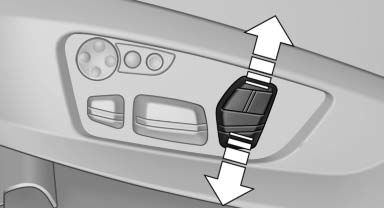
Adjusting electrically.
Distance to back of head: manual head restraints
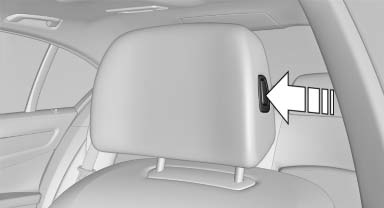
- Forward: pull.
- Back: press the button and push the head restraint toward the rear.
Distance to the back of the head: power* head restraints
The head restraint is automatically repositioned when the shoulder support is adjusted.
Adjusting the side extensions
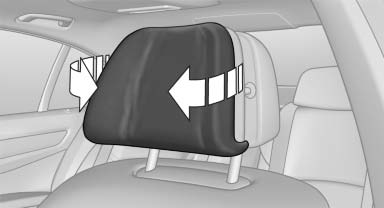
Fold forward for increased lateral support in the resting position.
Removing
The head restraints cannot be removed.
See also:
Activating/deactivating Bluetooth
Bluetooth is not permitted everywhere. Comply
with all safety guidelines and regulations.
1. "Telephone"
2. Open "Options".
3. "Bluetooth®"
...
The concept
Top View assists you in parking and maneuvering.
The area around the doors and the road area
around the vehicle are shown on the Control
Display for this purpose. ...
Tilt alarm sensor
The tilt of the vehicle is monitored.
The alarm system responds in situations such
as attempts to steal a wheel or tow the car. ...