
Fuses
Notes
 Replacing fuses
Never attempt to repair a blown fuse and do not replace a defective fuse with a substitute of another color or amperage rating; this could lead to a circuit overload, ultimately resulting in a fire in the vehicle.
Plastic tweezers and information on the fuse types and locations are stored in the fuse box in the cargo area.
In the engine compartment
1. Use the onboard vehicle toolkit to loosen the three cover screws, arrow 1.
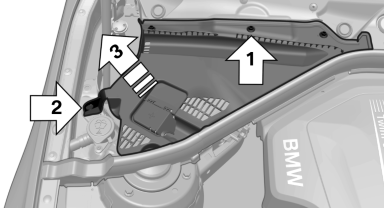
2. Pull up the holder, arrow 2.
3. Remove the cover from one side, arrow 3.
4. Press the four fasteners and remove the cover.
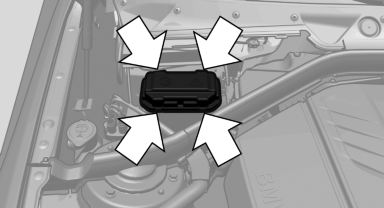
Reattaching the covers
1. When attaching the cover, make sure that all four fasteners are engaged.
2. Attach the cover under the rubber lip and then thread it between the bars.
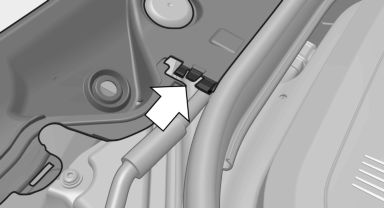
3. Press down on the holder and tighten the three screws.
In the cargo area
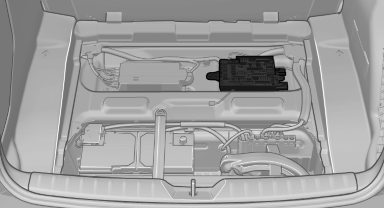
Raise the cargo floor panel.
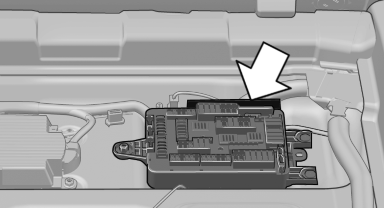
Information on the fuse types and locations is found on a separate sheet.
See also:
Approved mobile phones
Details on which mobile phones and external
devices with a Bluetooth interface are supported
by the mobile phone preparation package
can be obtained at www.bmwusa.com/bluetooth.
Displaying the ...
Activating HDC
Press the button; the LED above
the button
lights up. ...
Starting the engine
Do not run the engine in enclosed areas; otherwise,
the inhalation of toxic exhaust gases can cause loss of consciousness and death.
The exhaust gases contain carbon monoxide, an odorless and col ...