
Tire inflation pressures
Information for your safety
It is not merely the tires' service life, but also driving comfort and, to a great extent, driving safety that depend on the condition of the tires and the maintenance of the specified tire pressure.
 Check the tire inflation pressure regularly
and correct it, if necessary: at least twice a month and before starting long trips.
If you fail to observe this precaution you may be driving on tires with incorrect
tire pressures, a condition that can not only compromise your vehicle's driving
stability, but also lead to tire damage and the risk of an accident. Do not drive
with deflated, i.e. flat tires, except when using run-flat tires. A flat tire will
seriously impair your vehicle's handling and braking response. Attempts to drive
on a flat tire can lead to loss of control over the vehicle.
Check the tire inflation pressure regularly
and correct it, if necessary: at least twice a month and before starting long trips.
If you fail to observe this precaution you may be driving on tires with incorrect
tire pressures, a condition that can not only compromise your vehicle's driving
stability, but also lead to tire damage and the risk of an accident. Do not drive
with deflated, i.e. flat tires, except when using run-flat tires. A flat tire will
seriously impair your vehicle's handling and braking response. Attempts to drive
on a flat tire can lead to loss of control over the vehicle.
Only check tire inflation pressure when the tires are cold. This means after a maximum of 1.25 miles/2 km driving or when the vehicle has been parked for at least 2 hours. When tires are warm, the tire inflation pressure is higher.
 After correcting the tire inflation pressure,
reset the Tire Pressure Monitor, , or reinitialize the Flat Tire Monitor.
After correcting the tire inflation pressure,
reset the Tire Pressure Monitor, , or reinitialize the Flat Tire Monitor.
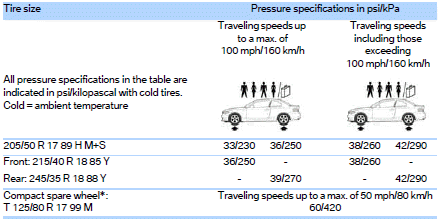
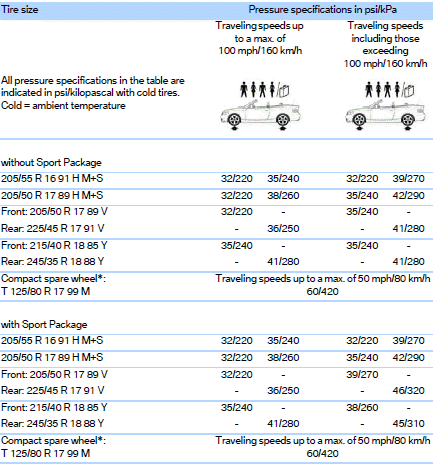
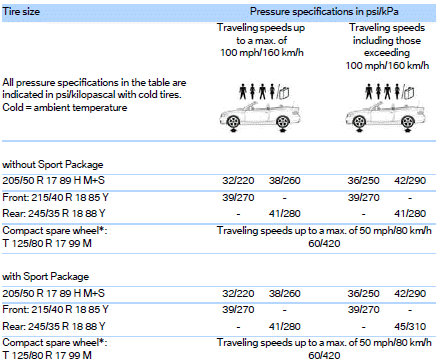
The tables below provide all the correct inflation pressures for the specified tire sizes at ambient temperature.
The inflation pressures apply to the tire sizes
approved and tire brands recommended by BMW; a list of these is available from your
BMW center.
For correct identification of the right tire inflation pressures, observe the following:
> Tire sizes for your vehicle
> Maximum allowable driving speed
Tire inflation pressures for driving up to
100 mph or 160 km/h
For normal driving up to 100 mph or 160 km/h and to achieve optimum driving comfort, adjust pressures to the respective tire inflation pressures listed on the following pages in the columns for traveling speeds up to a maximum of 100 mph or 160 km/h.
These tire inflation pressures can also be found on the driver's side door pillar when the driver's door is open.
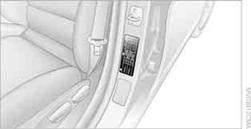
The maximum permissible speed for these tire
pressures is 100 mph or 160 km/h. Do not exceed this speed; otherwise, tire damage
and accidents could occur.
Tire inflation pressures for driving above 100 mph or 160 km/h
In order to drive at maximum speeds in excess
of 100 mph or 160 km/h, adjust pressures to the respective tire inflation pressures
listed on the following pages in the columns for traveling speeds including those
exceeding 100 mph or 160 km/h. Otherwise, tire damage and accidents could occur.
Observe all national and local maximum speed limits; otherwise, violations of the laws could occur.
Coupe: tire inflation pressures for the 128i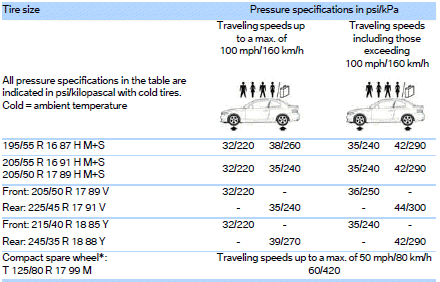
See also:
Radar sensor
Position
Position
The radar sensor is integrated in the bumper.
Dirty or covered sensor
A dirty or covered sensor may hinder the detection
of vehicles.
▷ If necessary, clean the radar s ...
Opening
1. Briefly press the rear edge of the fuel filler
flap.
Opening
2. Turn the fuel cap counterclockwise.
3. Place the fuel cap in the bracket attached to
the fuel filler flap. ...
Initiating an Emergency Request
1. Press the cover briefly to open it.
Initiating an Emergency Request
2. Press the SOS button until the LED in the
button lights up.
▷ The LED lights up: an Emergency Request
was initi ...